AI for Environmental & Planning Practices
The Planning Data Problem
Local planning authorities in England. Each with its own local plan, supplementary planning documents, neighbourhood plans, and site allocation policies. Add appeal decisions from the Planning Inspectorate, Secretary of State call-in decisions, and High Court judicial reviews, and the volume of relevant planning data is vast. No planning lawyer can have read every relevant decision in every authority. AI can.
Planning and environmental law is one of the most data-rich practice areas in the legal market - and one of the least well served by technology. A planning partner advising a developer on a major application needs to consider the local plan, supplementary planning documents, the NPPF, relevant appeal decisions, comparable application outcomes, consultation patterns, and the political dynamics of the local authority. Most of this research is done manually, from memory, or by junior lawyers trawling the Planning Inspectorate website.
Meanwhile, PropTech companies are moving fast. LandTech is selling AI-powered planning intelligence directly to developers and land promoters. Searchland offers automated site assessment. Glenigan provides construction project intelligence. These platforms are not replacing planning lawyers - yet. But they are providing the data infrastructure that planning decisions are made on, and they are positioning themselves between the developer and the law firm.
The firms that are responding are building their own analytical tools. AI that ingests the entire corpus of appeal decisions for a local authority area and identifies the decisions most relevant to a specific application. Tools that map Section 106 obligations across a developer client's portfolio and alert to upcoming trigger points. Systems that monitor planning policy changes across every authority in England and flag those relevant to specific client sites.
The competitive advantage is not in knowing the law - every planning lawyer knows the law. It is in having the infrastructure to apply it comprehensively to every matter, backed by a data set that no individual lawyer could hold in their head.
The planning and environmental landscape is being reshaped by three structural shifts.
First, the government's planning reform agenda is accelerating the pace of policy change. The Levelling Up and Regeneration Act, National Development Management Policies, mandatory local plan updates, and changes to the NPPF are creating a regulatory environment where planning policy is a moving target. Firms need systems that track these changes and map them against live client matters automatically.
Second, Environmental regulation is expanding in scope and complexity at a pace that overwhelms manual compliance. Biodiversity Net Gain became mandatory in 2024. Nutrient neutrality requirements affect development in large parts of England. Environmental Impact Assessment regulations are being reformed. The Future Homes Standard is adding energy performance requirements to every residential development. Each of these creates new compliance obligations that need to be tracked across every active project.
Third, planning data is becoming more structured and more accessible. The Planning Inspectorate publishes appeal decisions in searchable formats. Local authorities are moving to digital planning systems through the DLUHC planning software programme. HMCTS is digitising enforcement and judicial review processes. This creates an unprecedented opportunity for firms that can analyse this data systematically - turning the raw material of planning decisions into competitive intelligence.
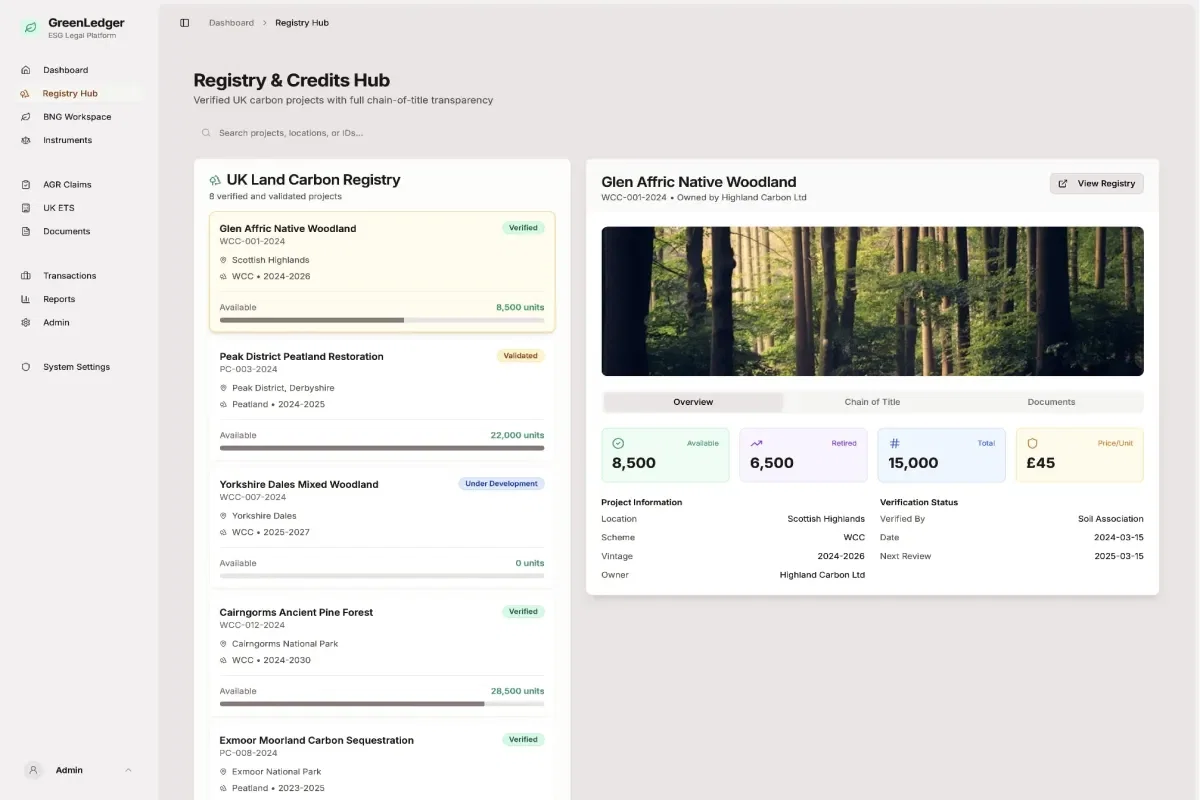
GreenLedger
A legal-grade workflow platform that automates BNG agreements, verifies ESG credits, and manages environmental compliance, purpose-built for UK environmental law practices.
View full case study5 Predictions: How AI Will Reshape Planning & Environmental Practice by 2029
Site assessment will be AI-powered before a planning lawyer is instructed
Developers and land promoters will use AI tools to assess planning feasibility before engaging a law firm. The tools will analyse local plan allocations, planning history, appeal decision patterns, and constraint mapping to produce a structured risk assessment. Planning lawyers will need to at least match this level of analysis - or better it - to justify their instruction. The days of a planning partner relying on personal knowledge of "their patch" are numbered.
Appeal decision analytics will become a standard advocacy tool
Planning barristers and solicitor advocates will use AI to analyse the entire corpus of relevant appeal decisions before preparing for an inquiry. The tool will identify the decisions most likely to be cited by the inspector, the arguments most likely to succeed on specific policy grounds, and the inspector's track record on comparable cases. Preparation becomes evidence-based rather than experience-based.
Section 106 and planning obligation management will be fully automated
Developer clients managing portfolios of sites with complex Section 106 obligations, CIL liabilities, and planning conditions will expect their law firm to provide a digital platform for tracking triggers, deadlines, and compliance requirements. Manual tracking of planning obligations across a 30-site portfolio is not sustainable. Automated tracking with alerts and compliance dashboards will be the minimum expectation.
Environmental compliance monitoring will become a distinct product offering
The intersection of BNG obligations, nutrient neutrality credits, EPC requirements, and carbon reporting duties creates a compliance monitoring need that spans the entire lifecycle of a development. Firms that build monitoring tools covering all of these obligations in one platform will create a new recurring revenue stream - charging developers a monthly fee for continuous environmental compliance oversight.
Planning policy monitoring will be automated across all 340 authorities
AI will monitor local plan updates, SPD revisions, neighbourhood plan adoptions, and CIL charging schedule changes across every planning authority in England. For firms advising national developers, this means they will know about a policy change in Northumberland the same day it is published - not when a local associate happens to notice it. This changes how national planning practices operate.
AI Planning Intelligence, Appeal Analytics & Environmental Compliance
Planning Appeal Decision Analytics
AI that ingests the entire Planning Inspectorate appeal decision database and maps decisions by authority, policy ground, development type, and outcome. Produces structured analysis of how specific policy arguments have been received by inspectors. Identifies the most relevant precedent decisions for any given application or appeal.
Section 106 & Planning Obligation Portfolio Management
Automated tracking of planning obligations, trigger points, compliance deadlines, CIL liabilities, and phasing requirements across multi-site development portfolios. Dashboard visibility for developer clients with automated alerts when obligations are approaching. Replaces the spreadsheets and diary systems that currently manage this critical risk.
Environmental Compliance & BNG Monitoring
Continuous monitoring of biodiversity net gain obligations, nutrient neutrality credit requirements, EPC compliance, and carbon reporting duties across development portfolios. Integrated tracking that covers environmental obligations alongside traditional planning conditions in one view.
Planning Policy Change Monitoring
AI monitoring of local plan updates, NPPF changes, SPD revisions, and neighbourhood plan adoptions across all 340 local planning authorities in England. Flags policy changes relevant to specific client sites and live applications automatically. National planning practices get authority-level intelligence without authority-level resource.
What We've Learned Building for Environmental & Planning
Planning data is messier than almost any other legal data set. Local authority websites are inconsistent, planning histories are incomplete, and appeal decisions use wildly different formats across the 340 authorities. We spent more time on data cleaning and normalisation than on the AI layer itself. Any firm trying to build planning AI tools should budget double what they think they need for data preparation.
The most valuable feature in our planning tools turned out to be the simplest: a search that could find every relevant appeal decision for a specific policy argument across all jurisdictions. Planning barristers told us this alone saved them hours per case. One barrister said: "I found a 2019 decision from a completely different authority that was directly on point for my case. I would never have found it manually. That decision won the appeal."
Developer clients care about one thing above all in planning technology: portfolio visibility. They want to log in and see every site, every application, every obligation, every deadline in one view. The legal analysis underneath is important, but the dashboard is what they show their board. We learned to build the dashboard first and the intelligence layer second.
Can AI really assess planning application prospects?
AI provides evidence-based analysis, not predictions. It reviews the relevant local plan policies, comparable applications and their outcomes, appeal decisions on similar policy grounds, and consultation response patterns to build a structured picture of likely issues and risks. The lawyer uses this evidence base to advise the client. It is particularly strong at identifying policy conflicts, precedent decisions, and consultation objection patterns that might otherwise be overlooked in manual research.
How does AI handle the complexity of environmental regulations?
Environmental regulation is extensive but structured - which makes it well suited to AI analysis. The AI tracks requirements across biodiversity net gain, nutrient neutrality, environmental permits, EPC standards, carbon reporting, and planning conditions. It maps these against project-specific obligations and flags compliance gaps. The complexity that overwhelms manual tracking is exactly what AI handles well. For a developer managing 20 active sites, this is the difference between systematic compliance and hopeful compliance.
How does this compare to PropTech platforms like LandTech or Searchland?
PropTech platforms provide excellent data layers - constraint mapping, planning history, ownership data. What they do not provide is legal analysis. They can tell you that a site has a flood risk designation, but they cannot advise on the legal implications for your application strategy. Our tools sit on top of the data layer and add the legal intelligence - mapping planning policy against site constraints, analysing appeal decision precedents, and producing outputs that a planning lawyer can use directly in client advice.
What about the data quality issue with local authority planning records?
It is real and it is significant. Planning data across 340 local authorities is inconsistent in format, completeness, and accessibility. We invest heavily in data cleaning, normalisation, and ongoing quality assurance. The AI is only as good as the data it analyses. That said, even imperfect AI analysis of planning data is more comprehensive than any individual lawyer's manual research. The system analyses everything that is available, flags data quality issues, and improves as more data is ingested.
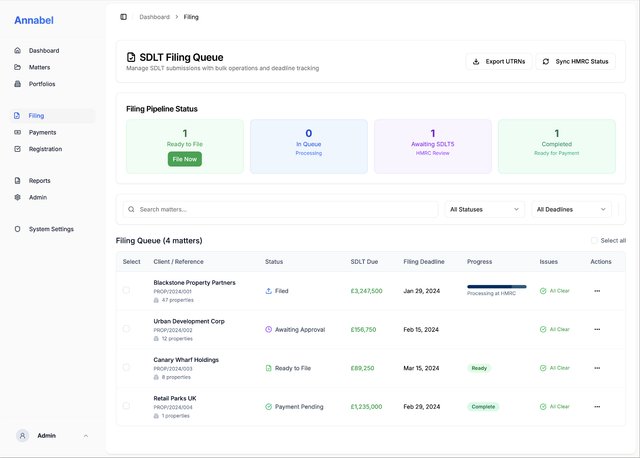
SDLT Tracker
A portfolio-grade SDLT calculator and filing platform for commercial and mixed-use matters - import once, calculate correctly, file in bulk, and move to registration with confidence.
View full case study