AI for Real Estate Practices
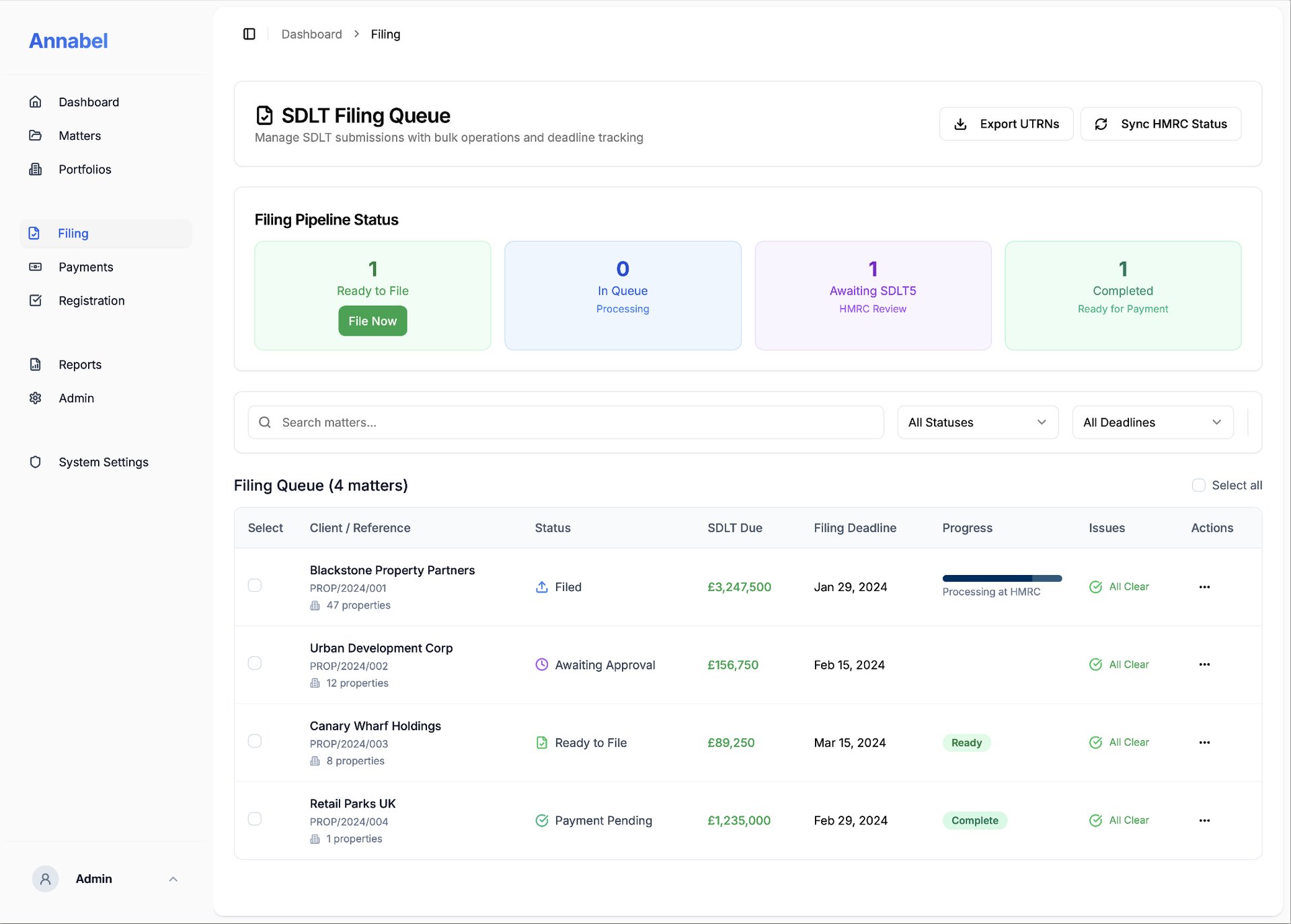
SDLT Tracker
A portfolio-grade SDLT calculator and filing platform for commercial and mixed-use matters - import once, calculate correctly, file in bulk, and move to registration with confidence.
View full case studyIn 2025, Orbital Witness raised £12m to automate property due diligence. LandTech is selling planning intelligence directly to developers. Coyote Software is offering institutional landlords automated lease event tracking. These are not law firms. They are technology companies eating into work that real estate practices have done for decades.
The pattern is clear. Any real estate workflow that involves reading a document, extracting a date, or populating a spreadsheet is being automated by someone. The question for law firms is whether they build these tools themselves - keeping the client relationship and adding a technology layer to their advisory offering - or whether they let PropTech companies disintermediate them one workflow at a time.
The firms we work with are choosing to build. Not because they enjoy technology projects, but because they have seen what happens when a client starts using a third-party platform for lease management. The transactional advisory follow-on work dries up. The relationship becomes commodity procurement. The firm becomes replaceable.
The winning strategy is not to resist the technology shift. It is to own it. Build the platform. Become the data layer for the client's portfolio. Make the technology an extension of the advisory relationship, not a replacement for it.
The UK real estate market is undergoing three structural shifts that make AI adoption urgent rather than optional.
First, the institutional landlord model is consolidating. REITs and private equity-backed platforms are managing larger portfolios across more asset classes. Their lease management needs are outgrowing what any law firm can service manually. They need platforms, not people reading documents.
Second, the Build to Rent sector is creating a new category of lease documentation at volume. Hundreds of residential leases per development, each requiring compliance monitoring, break clause tracking, and rent review management. The economics of manual review do not work at this scale.
Third, ESG reporting requirements are adding a compliance layer to every property portfolio. Energy performance certificates, sustainability covenants, and carbon reporting obligations need to be tracked across the portfolio alongside traditional lease events. Firms that can offer integrated monitoring - lease obligations plus ESG compliance in one view - have a significant competitive advantage.
5 Predictions: How AI Will Reshape Real Estate Legal Practice by 2029
Property due diligence will become a commodity product
AI-powered title analysis and search extraction will reduce standard residential and commercial due diligence to a semi-automated workflow. Firms that differentiate will do so on speed and the quality of their risk analysis layer, not on the volume of documents they can review.
Lease management platforms will replace retainer relationships
Institutional clients will expect their law firm to provide a digital platform for portfolio oversight as standard. Firms without one will lose beauty parades to firms that have one, regardless of the quality of their lawyers.
Planning risk assessment will become data-driven
AI models trained on planning decision data will provide probabilistic assessments of application outcomes. This will change how developers evaluate sites and how firms advise on planning strategy. The firms contributing training data from their own caseloads will have the most accurate models.
Real estate practices will generate recurring technology revenue
The firms that build client-facing platforms will transition from purely time-based billing to a hybrid model - advisory fees plus platform subscription. This changes the economics of the practice and creates defensible recurring revenue.
ESG compliance monitoring will become a practice area in its own right
The intersection of environmental regulation, lease obligations, and sustainability reporting will require specialist tools that combine legal analysis with environmental data. Firms that build these tools early will own the space.
Automating Lease Extraction, Portfolio Monitoring & Property Due Diligence
Automated Lease Portfolio Monitoring
AI that ingests entire lease portfolios, extracts key dates, break clauses, and covenant obligations, then surfaces upcoming events with risk flags. Lawyers shift from reactive advice to proactive real estate intelligence.
AI-Powered Property Due Diligence
Automated extraction and analysis of title documents, searches, and planning records. AI identifies risks, flags anomalies, and produces first-draft reports so lawyers focus on judgement, not document processing.
Covenant Tracking & Compliance Alerts
Continuous monitoring of lease and loan covenant obligations with automated compliance testing and deadline alerts. Replaces spreadsheets and calendar reminders with a structured, auditable system.
Client-Facing Portfolio Dashboards
Live dashboards that give corporate real estate clients visibility into their portfolio health, upcoming events, and risk exposure. Positions the firm as a strategic data partner, not just a transactional adviser.
What We've Learned Building for Real Estate
The hardest part of building lease monitoring tools is not the AI extraction - it is the data structure underneath. Every firm organises lease data differently, and the tool has to flex around existing workflows rather than forcing a new one. We learned this the expensive way on our first build.
Lawyers do not trust automated extraction until they can see the source clause highlighted alongside the extracted data. Building that traceability into the UI from day one was the single biggest factor in adoption.
The real ROI is not time saved on individual lease reviews. It is the ability to offer clients quarterly portfolio reports as a value-add service - something that was previously too labour-intensive to do profitably.
How long does it take to build an AI lease monitoring tool?
A working prototype takes 6-8 weeks. A production-ready tool with client-facing dashboards typically takes 3-4 months. The timeline depends on the complexity of your lease structures and how many document types you need to support. We start with a discovery sprint to scope the build properly.
Can AI handle complex real estate due diligence?
AI handles the extraction and structuring layer very well - pulling key terms, dates, and obligations from title documents, searches, and lease agreements. It does not replace the lawyer's judgement on risk, but it gives them the full picture in hours instead of days. We have built tools that process 200+ document data rooms overnight.
What does AI-powered property portfolio management look like in practice?
The client logs into a dashboard that shows all their properties, upcoming lease events, covenant compliance status, and risk flags. Their law firm manages the platform and uses it to deliver proactive quarterly briefings. It changes the relationship from reactive advice to ongoing strategic partnership.
How does AI handle non-standard lease formats and older documents?
Modern OCR handles scanned documents well, and AI extraction models are trained on a wide variety of lease formats - from institutional standard forms to bespoke development agreements. The system flags documents it cannot parse with high confidence for manual review. In practice, we see 85-90% automated extraction rates on typical commercial lease portfolios, rising to 95%+ for standardised institutional leases.
What is the difference between Purple's approach and off-the-shelf PropTech tools?
PropTech tools are built for a generic market. They work well for standard use cases but cannot be adapted to a specific firm's workflows, precedent structures, or client reporting requirements. We build tools that are trained on your firm's lease library and integrated with your existing systems. The result is a tool that works the way your lawyers already work, not one that forces them to change.
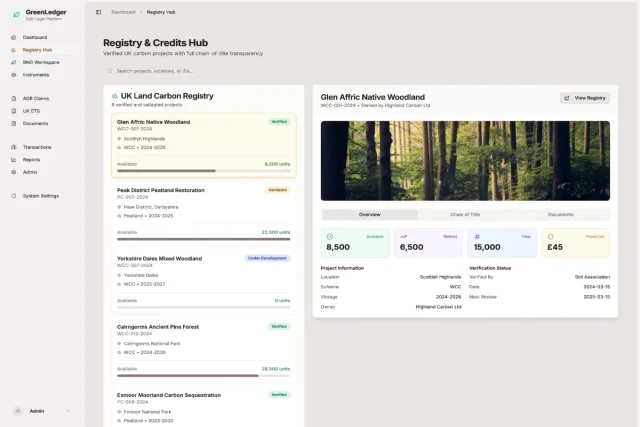
GreenLedger
A legal-grade workflow platform that automates BNG agreements, verifies ESG credits, and manages environmental compliance, purpose-built for UK environmental law practices.
View full case study